What Is Experiential Learning and Why Do Children Need It?
Children are curious by nature. They do not just want to hear but also like to touch and explore. They may have lots of questions as they figure out how things work. In traditional classrooms, it is common to expect students to sit quietly and absorb information from textbooks and lectures. However, this concept has become a myth. Today, children learn best when they are not only listening but also observing, trying, questioning, and reflecting on what they discover. Here comes the importance of experiential learning.
This practical, child-focused approach bridges classroom lessons and real-life understanding. It enables effortless memorization and actively engages children through doing, feeling, and thinking. Supporting this concept is important, as its results are remarkable.
Give Your Child the Best Start in Life
Admissions are now open for 2027–28. Secure your child's place at one of Bangalore's top CBSE schools.
Apply for Admission
What Is Experiential Learning?
Before supporting this concept, it is crucial to understand its benefits. Experiential learning means learning through experience. In the past, children received information passively, making it hard for them to participate actively or truly understand concepts.
What does this learning program look like? Here are the details:
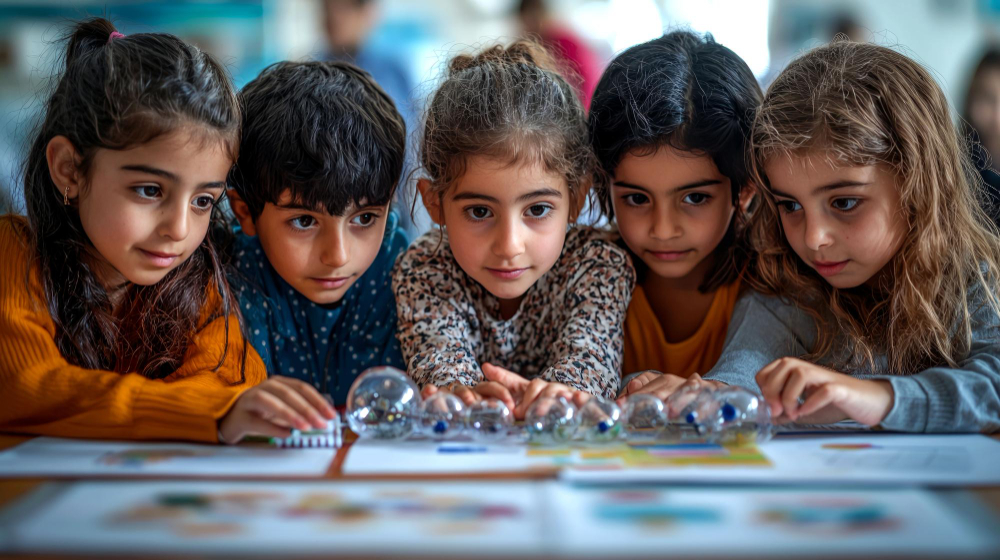
- Learning through hands-on activities: Here, children are equipped with several items to build, experiment, create, and interact directly rather than just reading about them.
- Understanding concepts through real experiences: In this learning process, a child can have practical experiences. For example, visiting a vegetable garden helps students understand photosynthesis far more deeply than just reading a definition.
- Encouraging children to ask questions and explore: This learning process also makes children curious to find answers rather than just having them from teachers. They can freely ask questions and explore the answers.
- Moving beyond memorization: Understanding ideas and practical implementations helps them move forward without the burden of remembering facts for a test.
John Dewey and David Kolb are renowned educators who created the foundation of experiential learning and helped children find the right path. They also believed that experience is the most powerful teacher, and top schools around the world are embracing this approach. With this effective learning methodology, children learn more, retain more, and enjoy learning more.
Why Is Experiential Learning Important for Children?
Children love to discover new things, new ideas, and concepts. Therefore, they like to touch, build, observe, or participate. They also prefer brainstorming activities that help them develop stronger and more lasting connections, which were missing in the traditional learning concept.
Experience Our Campus Firsthand
See our world-class facilities, meet our faculty, and understand what makes CMR Gandhi special. Book a free campus tour today.
Book Campus Tour
Here is why this approach matters so much in the primary learning process and what the benefits of this learning method are:
Children usually remember concepts better when they experience them directly. For example, a child who makes a paper bridge and tests how much weight it holds will understand the structural concepts well.
Download Our Brochure
Explore our programs, facilities, and learning approach at CMR Gandhi. Free download for parents.
Get Free Guide
This learning concept builds curiosity and confidence among children. With this concept, they can easily ask “why” and “how,” and that helps them develop a natural love for learning.
This concept also improves thinking capability, observation power, and communication. It asks children to observe every little thing carefully and think critically about what they see. It also allows them to talk about their ideas with others.
It helps children connect school learning with daily life. It helps improve their knowledge and make it more relevant, purposeful, and exciting.
How Does Experiential Learning Help in Child Development?
Builds Stronger Concept Understanding
Children understand topics more deeply when they can see, touch, test, and apply ideas. According to child psychology, it is the most accurate way that helps children explore new ideas through an experiment or a mathematical idea demonstrated with everyday objects. Therefore, it leaves a far more lasting impression than a textbook explanation alone.
Encourages Critical Thinking
A child should have answers for every “why” and “how” rather than merely memorising answers. When a child is presented with a problem like building a structure, solving a puzzle, or conducting an experiment, they should think, reason, and try different approaches. This habit can become a lifelong tool for navigating challenges inside and outside the classroom.
Improves Communication and Teamwork
Making children interested in group activities, classroom discussions, role plays, and collaborative projects can help them express their ideas clearly. It also helps them adjust to any group and listen to the ideas of others. Over time, these experiences develop their confidence to communicate well.
Builds Confidence and Independence
Taking part in practical activities helps boost confidence. Children can arrive at their own discoveries and feel a genuine sense of achievement. This builds self-belief, improves their confidence, and makes them enthusiastic to do something new and creative. Therefore, they can become problem solvers instead of depending upon the guardian.
Makes Learning More Enjoyable
This trendy learning concept also makes children feel more involved. It also motivates them to perform several hands-on activities, experiments, storytelling, art, nature walks, and real-life examples. So, there is no doubt to say that this learning method is the solution to make children attend classes willingly, participate actively, and carry a love of learning with them into adulthood.
Examples of Experiential Learning in School
Experiential learning takes different shapes in a well-designed school environment. Here are some examples:
- Science experiments — Testing hypotheses, observing results, and drawing conclusions in the classroom or laboratory.
- Field visits — Trips to farms, museums, historical sites, or nature reserves that bring textbook topics to life.
- Role-play activities — Acting out scenarios such as market transactions, historical events, or community roles to build empathy and contextual understanding.
- Storytelling and enactment—Children narrating, dramatizing, or illustrating stories to deepen language comprehension and expression.
- Art and craft-based learning—Creating models, collages, or visuals that reinforce concepts across subjects.
- Nature walks — Observing plants, insects, weather patterns, and seasonal changes directly in the environment.
- Group projects — Collaborative tasks that build research, planning, and teamwork skills alongside academic content.
- Math through objects and real-life examples—Using building blocks, counting objects, measuring ingredients, or solving everyday problems to make numbers meaningful.
- Language learning through speaking, reading, and activities—debates, storytelling sessions, read-alouds, and peer discussions that make language a living, breathing part of the school day.
Experiential Learning at CMR Gandhi Public School
CMR Gandhi Public School believes that every child deserves an education that goes beyond textbooks. They must have a clear concept and a learning mentality to bring new ideas to life. Thus, they design their learning program in such a way that sparks genuine curiosity, builds real understanding, and nurtures a love for learning that lasts a lifetime.
The thoughtfully structured learning journey at this school starts from the Montessori stage and progresses through primary and higher classes. Therefore, you can be sure that children are not simply moving from grade to grade but are getting ready to build on a strong foundation of learning at every stage of their development.
Here, children are equipped with several hands-on activities in early childhood. Therefore, it helps them pursue collaborative projects and real-world problem-solving in senior classes. The environment at this school is designed to help children grow academically, socially, and personally as well by encouraging them to ask questions, take part in discussions, and explore new ideas. Hence, they become more confident in thinking independently.
So, it becomes the answer for the families searching for the best CBSE schools in Sarjapur Road, Bangalore.
Why Should Parents Look for Experiential Learning in a School?
Choosing the right school is a vital responsibility of parents. To take such an important decision, parents need to check beyond infrastructure and academics. As the quality of the learning environment matters enormously, you must ask some key questions before evaluating schools:
- Does the school encourage activity-based learning? Look for classrooms that go beyond lectures. Those who trust this learning concept must visit the school and make their children build, experiment, create, and collaborate confidently.
- Are children allowed to ask questions? Only a top school like CMR Gandhi Public School can create a healthy learning environment by welcoming curiosity. They make children feel free to raise their hands, express doubt, and explore ideas freely.
- Are lessons connected to real life? Ask this question to help children see how what they learn in class relates to real-life examples of their concepts.
- Are students involved in projects and classroom activities? Group work, presentations, and projects develop skills that textbooks alone cannot teach.
- Does the school support both academic and social development? To have an answer to this question, you must look for schools that value emotional intelligence, communication, and teamwork apart from academic achievement.
Parents exploring schools in this area can look for a learning environment that supports activity-based learning, curiosity, and all-round growth; visit them shortly. They are the only solution when you are exploring pre-schools in Sarjapur Road or considering the best Montessori schools in HSR Layout. It is not only the school that offers a complete learning journey but also gives children the first priority.
Experiential Learning and the Future of Education
Marks are important, but modern education also needs to build problem-solving, creativity, communication, and confidence. The concept of modern education has changed. Empowering children with the right concept and ideation can make them more powerful, rather than just having the ability to recall information. In today’s competitive world, employers, institutions, and communities increasingly value people who can think individually, solve problems creatively, communicate effectively, and adapt to new challenges. Thus, this learning format becomes the future of education.
This learning program prepares children for exactly this. It helps develop the habits of mind and character that no examination can fully measure. Their never-ending resilience, curiosity, empathy, initiative, and confidence help keep learning even when things are difficult. Remember, children who truly understand concepts perform better on assessments. They can also think more independently and carry their learning further.
As education evolves, the concept of learning also needs to be upgraded. Therefore, trust the school that combines strong academic foundations with rich and meaningful experiences. It is the key to shaping the next generation of thinkers, creators, and leaders.
Conclusion
Experiential learning is not just a trend but the most natural and effective way for children to learn. It makes them more confident by doing, exploring, questioning, and reflecting. When schools create such environments for children to participate actively in their own education, it results differently. This learning process makes children understand more deeply, remember more clearly, enjoy, and collaborate more confidently.
So, if you want to experience these positive changes in your child, let them help with the right guidance, which they can find with CMR Gandhi Public School. They support creative minds and enthusiastic eyes to become capable and confident individuals. So, step into this educational platform shortly and let your child truly thrive in different aspects.