The Future of Education: How Integrating Technology is Transforming CBSE Schools
We’ve all witnessed how technology is evolving at the speed of light, and it has taken over most of the essential work, moving job markets from problem-centric to creative solution-centric. All of this is a crucial milestone of the 21st century, and we believe that our children must be consciously and thoroughly skilled to use these tools effectively.
Integrating technology, especially CBSE learning, is essential to expanding young learners’ critical thinking, problem-solving abilities, and creativity. By doing so, we ensure they become more than just technology consumers; they become innovators in their social and intellectual journey.
Give Your Child the Best Start in Life
Admissions are now open for 2025–26. Secure your child's place at one of Bangalore's top CBSE schools.
Apply for Admission
Briefly, let’s understand the fundamental benefits of technology, how it enhances the classroom learning experience, and how parents can help children choose the right technological tools and strategies we at CMR Gandhi Public School use to integrate technological advancements across our curriculum.
Tech in a CBSE Classroom

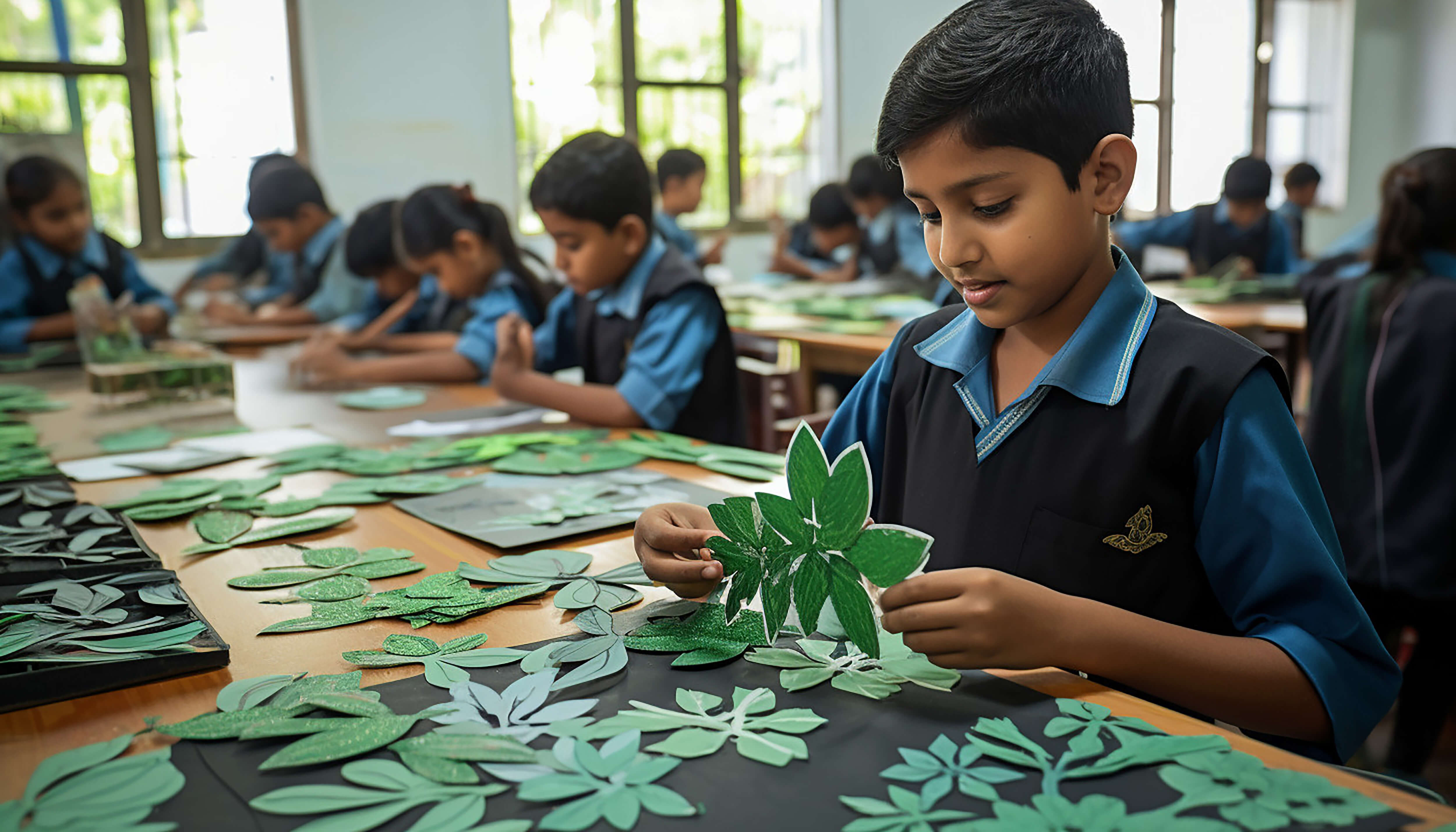
The quickest way to intrigue children and pique their interest in any topic is not through complex language and long lectures. We’ve seen our classrooms turn into interactive spaces with videos, live experimentation and creative in-class projects.
The benefits reach beyond capturing children’s attention.
Technological integration starts with administrative work and structuring the coursework: AI tools like MagicSchool, Diffit, and Eduaide have revolutionised how educators handle administrative tasks, create lesson plans, generate assessments, and provide personalised feedback. Meanwhile, implementing virtual reality (VR) and augmented reality (AR) has turned subjects like science and history into experiential learning. Online learning platforms and resources are provided for students to help them create their own digital library learning and explore perspectives worldwide.
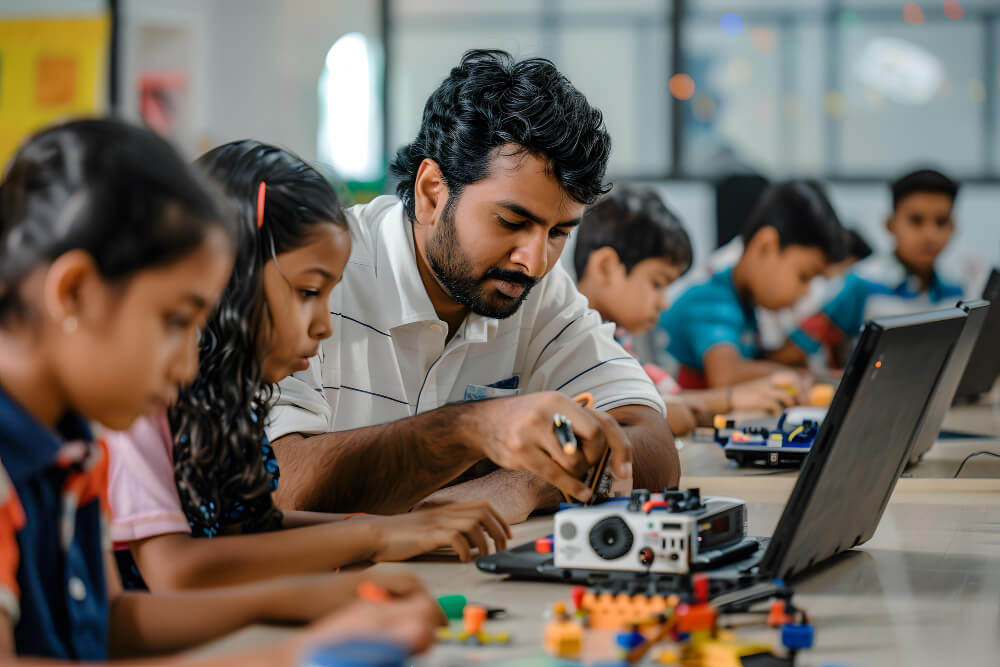
Technologies such as smart boards, AV rooms, digital tools (laptops and tablets), document cameras, 3D printers, robotics kits, and more are helping children embrace technology for productive use mindfully. This allows them to gradually become adept at learning, using, and creating their own technological solutions, further enhancing the flexibility of their learning.
Experience Our Campus Firsthand
See our world-class facilities, meet our faculty, and understand what makes CMR Gandhi special. Book a free campus tour today.
Book Campus Tour
Although technology is an integral part of children’s education, it can be highly addictive, and parents must help guide their children towards the best use of technology.
- Understand the educational needs and interests of your children
- Stay informed about the latest educational technologies and their usage
- Please select the right learning tools to help child align their learning styles and academic goals
- Introduce children to age-appropriate apps and educational tools that complement their school curriculum
For example, if your child shows interest in coding, introduce them to free coding platforms like Scratch or provide them with relevant kits to improve their skills in a fun and interactive manner.
Download Our Brochure
Explore our programs, facilities, and learning approach at CMR Gandhi. Free download for parents. - edhu change panu
Get Free Guide
You can refer to this info table and access the latest software and applications that may help children complement their learning:
| Maths |
DragonBox, Fish School |
| Language |
Spelling Correction, Duolingo |
| Science |
KhanAcademy Kids, PlayKids |
| Coding |
Scratch, Thinkrolls Play & Code |
| Gamified Learning |
Kahoot!, Barefoot World Atlas, CoolMathGames, Quizlet |
How CMR GPS Helps Kids Learn with Technology
CMR Gandhi Public School, as one of the best schools near Kodathi, Bengaluru, our approach to integrating technology into education stands out. Here’s a preview of how the school is creating an impact:
-
Coding and Robotics Classes
We offer coding and robotics classes as part of the regular curriculum without extra fees.
These classes are conducted once a week for consecutive weeks. In robotics classes, students from UKG to Grade 6 learn about basic robots and how to code for them. Whereas the actual coding classes, starting from Grade 1, focus on Scratch and Scratch Junior, providing children with a strong foundation in programming.
Students are taken to the computer lab(maths lab and science lab) weekly to learn about the basic functionalities of computers and their use cases.
This helps them to use technology for everyday use, be it creating their own digital library or maintaining notes on a computer/laptop. The skills taught focus on using all the important features of a computer wisely and productively.
Students visit the AV room each week to watch videos related to various subjects.
This visual learning aids in better understanding and retention of concepts. Our visual sessions with children are mainly on complex topics that need visual aids to understand the ideas better. Children have better retention and engage in lively discussions, consistently improving their scores and sense of things.
Visit our website to learn more about our institution, which is one of the best CBSE schools near Kodathi, Bengaluru.
Frequently Asked Questions
1. How is CMR Gandhi Public School redefining learning among CBSE schools in Bangalore through technology?
Among CBSE schools in Bangalore, CMR Gandhi Public School stands out for using technology in a way that feels natural and purposeful. Learning goes beyond the blackboard through videos, experiments, discussions, and creative projects. Students are encouraged to explore, question, and experiment, making learning interactive rather than rigid or mechanical.
2. Why is integrating technology in the classroom essential at CMR Gandhi Public School?
Children today grow up in a digital-first world, and the school recognises that avoiding technology is not the solution. By integrating technology in the classroom with clear intent, complex concepts become easier to understand, different learning styles are supported, and curiosity is encouraged. Technology is used to deepen understanding, not to replace thinking or learning by rote.
3. What digital learning tools are used at CMR Gandhi Public School, a leading CBSE school in Bangalore?
Students use smart boards, AV rooms, computers, tablets, and hands-on tools such as robotics kits. Teachers also use digital platforms and AI-based tools to plan lessons, provide personalised feedback, and manage assessments efficiently. For students, this results in better visual understanding, clearer explanations, and access to learning resources beyond textbooks.
4. How does integrating technology in the classroom improve student outcomes at CMR Gandhi Public School?
By integrating technology in the classroom, students understand concepts faster and retain them longer. They participate more actively, ask thoughtful questions, and gain confidence in subjects they once found challenging. Over time, this leads to stronger academic performance and improved learning outcomes.
5. What role do coding and robotics play at CMR Gandhi Public School in Bangalore?
Coding and robotics are introduced early as part of regular learning, not as optional add-ons. Younger students begin with basic logic and visual coding, while older students work with robotics and simple programming. The focus is on developing problem-solving, sequencing, patience, and creative thinking rather than just technical skills.
6. How are teachers trained for integrating technology in the classroom at CMR Gandhi Public School?
Teachers receive regular training on integrating technology in the classroom in a meaningful way. They learn how to align digital tools with lesson objectives, manage digital classrooms, and adapt content for varied learning levels. This ensures technology supports teaching while preserving strong teacher–student interaction.
7. Why do parents prefer CMR Gandhi Public School among CBSE schools in Bangalore for tech-driven education?
Parents notice positive changes in how their children learn. Students become more curious, confident, and capable of using technology responsibly for learning. The school maintains a healthy balance where screens are used with purpose, guidance is continuous, and learning remains child-centric. This balanced approach makes CMR Gandhi Public School a trusted choice among CBSE schools in Bangalore.